
Peak Compliance
When Following the Rules Stops Making You Safer


For most of modern history, compliance was sold as protection.
Follow the rules.
Give the information.
Fill out the forms.
Trust the process.
Compliance meant safety.
Transparency meant legitimacy.
Participation meant stability.
That equation no longer holds.
We’ve entered Peak Compliance — the moment when obeying the rules stops making you safer… and quietly starts doing the opposite.
When “Safety” Became a Data Request
Every year, the same promise is repeated:
“If we just collect a little more information, we can stop the bad actors.”
So we comply.
We upload IDs.
We scan faces.
We link accounts.
We explain transactions.
And with every new rule, the system grows more complex — and more fragile.
Because data doesn’t create safety.
It creates targets.
The Illusion of Control
Modern compliance systems are built on a comforting fiction:
That centralized visibility equals control.
If every transaction is tracked…
If every identity is verified…
If every flow of money is monitored…
Then surely crime disappears.
Except it doesn’t.
Instead:
Criminals adapt
Black markets persist
Surveillance expands
Ordinary people bear the cost
The result isn’t security.
It’s bureaucratic sprawl.
More Rules, More Risk
Here’s the paradox no one wants to say out loud:
The more compliant the system becomes, the more catastrophic its failures are.
Centralized databases don’t fail gracefully.
They fail:
All at once
Everywhere
Permanently
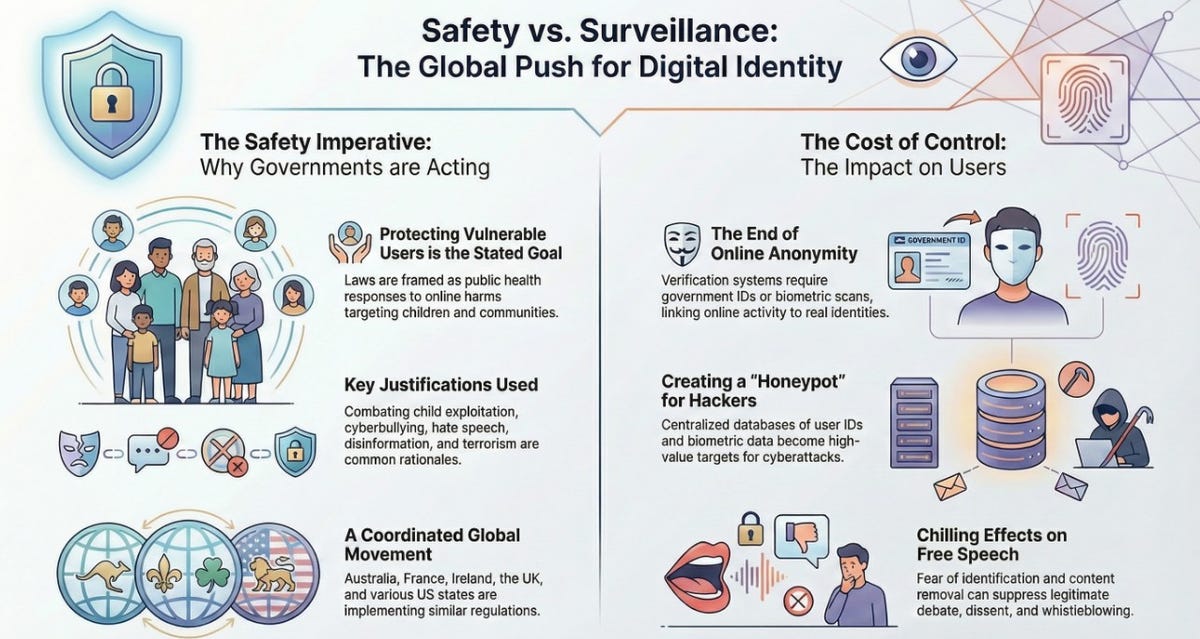
Data breaches don’t just expose passwords — they expose lives.
Names.
Addresses.
Financial histories.
Behavioral patterns.
Once leaked, this information cannot be recalled.
Compliance creates honeypots — and honeypots attract attackers.
Law-Abiding Citizens Pay First
The quiet truth of compliance culture:
The most compliant people carry the greatest risk.
They provide the cleanest data
They leave the deepest trails
They have the most to lose
Meanwhile, sophisticated criminals:
Use proxies
Use obfuscation
Use jurisdictions
Use asymmetry
Compliance doesn’t stop crime.
It stratifies vulnerability.
When Permission Becomes a Liability
At Peak Compliance, permission itself becomes dangerous.
If every action requires approval:
Accounts can be frozen
Access can be revoked
Funds can be delayed
Participation can be denied
Not because you did something wrong —
but because systems err, rules change, or algorithms flag anomalies.
You are compliant… until suddenly you aren’t.
Bitcoin’s Different Question
Bitcoin doesn’t ask:
“Who are you?”
It asks:
“Is this valid?”
No identity database.
No permission layers.
No centralized choke points.
Just verification.
Bitcoin’s security model isn’t built on surveillance.
It’s built on minimization:
Minimal trust
Minimal data
Minimal attack surface
That’s not a bug.
It’s the design.
Privacy Is Not Secrecy — It’s Risk Management
Privacy has been mischaracterized as something suspicious.
But in reality, privacy is defensive.
You don’t publish your home address on a billboard.
You don’t hand strangers your bank statements.
You don’t centralize sensitive data unless forced to.
Bitcoin treats privacy the same way engineers treat safety:
Reduce exposure.
Eliminate single points of failure.
Assume systems will break.
Because they always do.
The Compliance Tipping Point
There is a point where compliance stops protecting society and starts weakening it.
We’re past that point.
The system now demands:
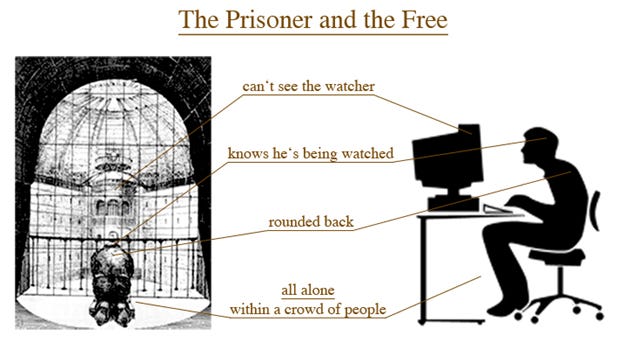
Total visibility
Permanent records
Universal participation
While offering:
No meaningful security guarantees
No data durability
No accountability when breaches occur
This isn’t safety.
It’s liability redistribution.
The Quiet Reversal
Bitcoiners aren’t rejecting rules.
They’re rejecting fragile systems disguised as protection.
They’re choosing:
Fewer intermediaries
Smaller attack surfaces
Verifiable rules over enforced trust
This isn’t radical.
It’s rational.
Final Thought
At Peak Compliance, following every rule doesn’t make you safe.
It makes you visible.
And in a world where visibility is harvested, breached, and weaponized, minimizing what you reveal is no longer rebellion.
It’s responsibility.
Bitcoin understood this from the beginning.
Not financial or legal advice, for entertainment only, do your own homework. I hope you find this post useful as you chart your personal financial course and Build a Bitcoin Fortress in 2025.
Thanks for following my work. Always remember: freedom, health and positivity!
Please also check out my Bitcoin Fortress Podcast on all your favorite streaming platforms. I do a weekly Top Bitcoin News update every week on Sunday, focused on current items of interest to the Bitcoin community. Please check it out if you haven’t already. Also now on Fountain, where you can earn Bitcoin just for listening to your favorite podcasts.
Also, check out my books:
Follow me on Nostr:
npub122fpu8lwu2eu2zfmrymcfed9tfgeray5quj78jm6zavj78phnqdsu3v4h5
If you’re looking for more great Bitcoin signal, check out friend of the show Pleb Underground here.
Compliance is a double edged sword!
And if you link it with CBDCs, social control, social scoring systems it becomes terrifying!
So the real question is:
do we want to still be compliant or do we try to become ghosts?
Last I like to recall that devastating comment/add by the wef during the pandemic:
YOU WILL OWN NOTHING AND YOU WILL BE HAPPY
My guess is that compliance is just a peace of the puzzle “they” are implementing.